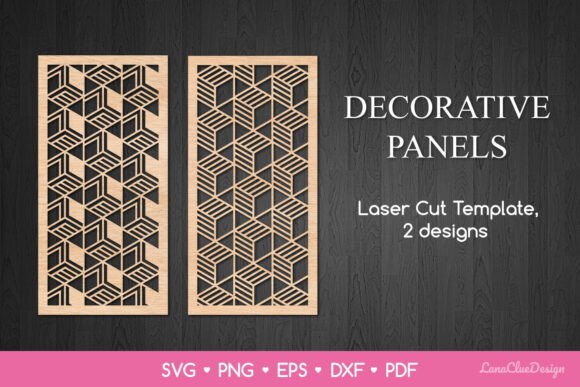
Geometrical Vertical Panels SVG for Design & Decor
Transforming a flat surface into a dynamic feature often requires more than just paint or wallpaper; it demands texture, depth, and precision. The Geometrical Vertical Panels Template SVG offers a versatile solution for creators looking to introduce modern structure into physical spaces. This digital asset is not merely a picture; it is a functional blueprint designed for fabrication. Comprising two distinct designs with a 1:2 aspect ratio, these templates serve as the foundational code for laser cutters, CNC routers, and plotting machines. Whether you are working with sturdy metal sheets, warm wood veneers, delicate paper, or durable vinyl, these files bridge the gap between digital concept and tangible reality.
The core value of this package lies in its adaptability. You receive a comprehensive zip file containing five industry-standard formats: SVG, EPS, PDF, PNG, and DXF. This variety ensures compatibility regardless of your specific hardware or software ecosystem. For a hobbyist using a desktop cutter, the SVG might be the go-to, while an industrial operator programming a large-format CNC machine will likely rely on the precision of the DXF or EPS files. The geometric patterns themselves are engineered to balance aesthetic appeal with structural integrity, ensuring that the final cut product holds together beautifully whether it is serving as a room divider or a piece of intricate wall art.
Why Different Creators Value Precision Templates
The appeal of a Geometrical Vertical Panels Template SVG shifts dramatically depending on who is holding the digital file. What looks like a simple pattern to one person represents a streamlined business opportunity to another. Understanding these varying perspectives helps clarify why such a specific tool has become essential across so many disciplines.
For the beginner or hobbyist, the primary concern is often ease of use and the fear of wasted materials. Cutting expensive wood or metal can be intimidating if the design fails during the process. These templates mitigate that risk. Because the geometric patterns are pre-calculated and tested, a novice can skip the complex mathematics of vector pathing and jump straight to creation. The inclusion of PNG files allows them to visualize the end result before committing to a cut, providing a safety net that encourages experimentation without the pressure of perfection.
In contrast, professional fabricators and architects evaluate these files through the lens of efficiency and scalability. Time is money in a workshop environment. A professional does not want to spend hours drawing a decorative fence pattern from scratch when a reliable, clean vector file is available instantly. They prioritize the DXF and EPS formats for their ability to maintain exact dimensions when scaled up for large terrace fences or commercial privacy screens. For them, the "1:2 ratio" specification is crucial, allowing them to tile the designs seamlessly across vast surfaces without awkward gaps or misalignments.
Practical Applications Across Industries
The versatility of these two designs allows them to slip into various roles within home interiors and exterior projects. Here is how different users might leverage this single product to achieve vastly different outcomes:
- Interior Designers: They often seek unique room dividers that define space without blocking light. By cutting these geometric patterns into thin plywood or acrylic, they can create semi-transparent screens that add a modern, artistic touch to open-plan living areas. The vertical orientation of the panels naturally draws the eye upward, making ceilings appear higher.
- Event Planners and Marketers: For pop-up shops, wedding backdrops, or trade show booths, portability and visual impact are key. Laser-cutting these designs into lightweight foam board or cardboard allows for the creation of stunning, temporary structures that photograph well for social media campaigns. The geometric nature provides a neutral yet sophisticated background that complements various branding colors.
- Papercut Artists: While often associated with hard materials, these templates shine in paper arts as well. The intricate connections within the geometric pattern challenge the artist's skill while providing a satisfying final piece for framing. The multiple file formats ensure that even detailed plotter cuts remain crisp and tear-free.
- Homeowners and DIY Enthusiasts: Balcony and terrace privacy is a common urban struggle. Instead of installing generic, mass-produced fencing, a homeowner can use these templates to cut custom metal or wood panels that match their specific railing dimensions. This adds a layer of personalization to the property that increases curb appeal.
Evaluating Quality and Flexibility
When deciding if a digital template fits your project, several factors come into play beyond just the visual style. The quality of the vector paths is paramount. Poorly constructed SVGs can cause laser cutters to stutter or CNC machines to make unnecessary movements, resulting in burn marks or rough edges. These geometrical panels are optimized for smooth machine operation, ensuring clean lines whether you are cutting 3mm cardstock or 10mm steel.
Flexibility is another critical metric. The fact that the package includes both SVG and DXF means you are not locked into one type of software. If you prefer Adobe Illustrator, the EPS and SVG files integrate seamlessly. If your workflow relies on AutoCAD or specialized CAM software, the DXF files provide the necessary compatibility. Furthermore, the 1:2 ratio is a strategic choice; it allows the panels to be repeated vertically or horizontally, giving the user the freedom to cover a small accent wall or a sprawling outdoor fence with the same cohesive look.
Cost-effectiveness also varies by user. For a small business owner selling custom home decor, buying a template for a fraction of the cost of hiring a designer significantly improves profit margins. It allows them to offer high-end, custom-looking products at competitive prices. For an educator teaching digital fabrication, these files serve as excellent teaching tools. Students can learn about material constraints, kerf compensation, and structural stability by manipulating these existing geometric forms before attempting to create their own from scratch.
Making the Right Choice for Your Project
Ultimately, determining whether this Geometrical Vertical Panels Template SVG is right for you depends on your immediate goals. If you are looking to prototype a new line of room dividers, the speed of deployment offered by these ready-to-cut files is invaluable. If you are a consumer looking to upgrade your balcony privacy, the ability to take these files to a local makerspace or online cutting service puts professional-grade design within reach.
Consider the material you intend to use. Wood offers warmth and is ideal for indoor partitions, while metal provides durability for outdoor fencing. Vinyl works best for adhesive applications on glass or smooth surfaces. Each material interacts with the geometric cuts differently, changing the play of light and shadow. The beauty of having two distinct designs in the pack is that you can test both to see which pattern resonates more with your specific spatial requirements.
In a world where customization is increasingly valued over mass production, having access to precise, high-quality digital templates empowers creators of all levels. Whether you are a freelancer pitching a new interior concept, a blogger documenting a DIY renovation, or a manufacturer scaling up production, these geometrical panels provide a reliable foundation. They remove the technical barriers of design, allowing you to focus on the creative execution and the final impact of your work. By leveraging these tools, you ensure that your projects are not only visually striking but also technically sound and efficiently produced.