Coffee Bar Sign Laser Cut Coffee House: A Guide to Digital Signage Files
In the competitive landscape of specialty coffee, visual identity plays a crucial role in customer experience. Shop owners and DIY enthusiasts increasingly turn to custom fabrication to create unique atmospheres. One popular method for achieving this is through the use of digital design files for laser cutting. The Coffee Bar Sign Laser Cut Coffee House represents a specific category of digital assets designed to help creators produce professional-grade interior signage with precision and efficiency.
This article explores the utility, technical requirements, and practical considerations of using these CNC-ready files. By understanding the nuances of file formats, machine compatibility, and design execution, you can determine whether this digital product aligns with your project goals.
Understanding the Product
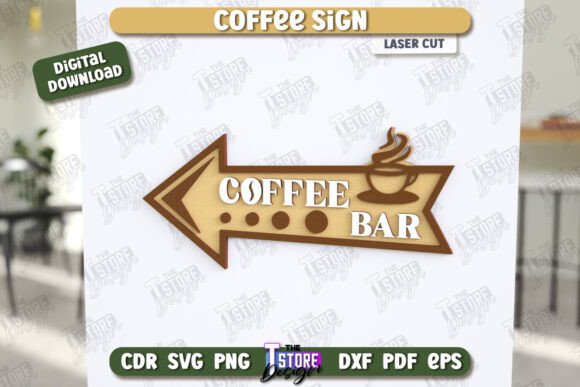
The Coffee Bar Sign Laser Cut Coffee House is not a physical object but a digital package containing vector and raster files. These files are intended for use with computer numerical control (CNC) machines, specifically laser cutters. The design typically features thematic elements relevant to coffee culture, such as stylized text, coffee beans, cups, or house motifs, arranged in a layout optimized for material cutting and engraving.
The primary value proposition lies in convenience and precision. Rather than spending hours designing complex vectors from scratch, users purchase a pre-made template. This allows them to focus on the fabrication process rather than the graphic design phase. The package usually includes multiple file formats to ensure broad compatibility with various software ecosystems used in digital fabrication.
Technical Specifications and File Formats
A critical aspect of evaluating any digital cutting file is understanding the included formats. A comprehensive package, such as the one associated with this coffee house sign, typically provides a zip archive containing several key file types:
- SVG (Scalable Vector Graphics): Widely supported by many design programs and web-based cutting interfaces. It is versatile but can sometimes suffer from scaling issues in specific software.
- DXF (Drawing Exchange Format): A standard format for CAD software. It is often preferred for its stability and precision in maintaining dimensions during import.
- EPS (Encapsulated PostScript): Commonly used in professional graphic design applications like Adobe Illustrator.
- PDF (Portable Document Format): Useful for viewing the design preview and sometimes for direct importing into certain cutting software.
- PNG (Portable Network Graphics): A transparent raster image used primarily for reference, previews, or sublimation printing, rather than vector cutting.
Understanding the distinction between these formats is essential for a smooth workflow. While SVG is popular, it is not always the most reliable for precise dimensional work in all environments.
Machine Compatibility and Software Considerations
Before purchasing, it is vital to assess your hardware and software setup. The product description explicitly notes that users must ensure their cutting machine and software are compatible with the provided files. Most modern laser cutters, such as those from Glowforge, xTool, or industrial Epilog and Universal systems, can interpret these standard formats.
However, software behavior varies significantly. A notable consideration involves LightBurn, a popular laser control software. Users have reported that LightBurn can sometimes distort the dimensions of SVG files upon import. This distortion can lead to signs that are slightly larger or smaller than intended, potentially causing fitment issues if the sign is designed for a specific frame or wall space.
To mitigate this risk, it is advisable to use the DXF file format when working with LightBurn. DXF files tend to retain their geometric integrity more reliably during the import process, ensuring that the final cut matches the designer’s original specifications. This technical insight highlights the importance of selecting the right file format based on your specific software stack.
Design Interpretation: Cutting vs. Engraving
Successful fabrication requires correctly interpreting the design layers. In laser cutting workflows, different line colors or styles typically indicate different actions. For this specific coffee house sign, the standard convention applies:
- Red Lines: These indicate cut paths. The laser will follow these lines completely through the material, separating the shape from the surrounding sheet.
- Black Lines: These indicate engraving areas. The laser will etch the surface without cutting through, adding detail, texture, or secondary text to the sign.
Users must configure their laser software to recognize these color codes. Failure to assign the correct power and speed settings to cut versus engrave operations can result in incomplete cuts or burned surfaces. Always perform test runs on scrap material to calibrate your machine before committing to the final piece.
Benefits and Tradeoffs
Choosing a pre-made digital file like the Coffee Bar Sign Laser Cut Coffee House offers several advantages. First, it saves time. Designing intricate vector art requires specialized skills in software like Adobe Illustrator or CorelDRAW. By purchasing a ready-made file, you bypass this learning curve. Second, it ensures aesthetic consistency. Professional designers create these files with balanced proportions and legible typography, reducing the risk of amateurish results.
However, there are tradeoffs. The primary limitation is customization. While you can scale the file, you cannot easily alter the core design elements without advanced vector editing skills. If you require a specific font change or a unique layout modification, a pre-made file may be restrictive. Additionally, reliance on digital files means you are dependent on the quality of the source. Poorly optimized nodes or open paths in the vector file can cause machine errors, though reputable sellers typically test their files thoroughly.
Ideal Use Cases
This product is a strong fit for several scenarios:
- Coffee Shop Interiors: Business owners looking to add branded, rustic, or modern signage to their counter areas or walls without hiring a costly sign maker.
- Home Coffee Stations: Enthusiasts creating a dedicated coffee corner in their kitchen who want a polished, professional look.
- Gift Giving: Crafters making personalized gifts for coffee lovers, using materials like wood, acrylic, or MDF.
- Small Batch Production: Makers who wish to produce multiple identical signs for sale at craft fairs or online marketplaces.
When to Consider Alternatives
While convenient, this solution may not suit everyone. If you lack access to a laser cutter, you will need to outsource the cutting to a local makerspace or a service bureau, which adds cost and logistical complexity. In such cases, purchasing a finished physical sign might be more economical.
Furthermore, if you require a highly unique brand identity that diverges significantly from standard coffee iconography, custom design services may be a better investment. Pre-made files are excellent for general aesthetics but may not capture niche branding requirements.
Practical Decision-Making Insights
To maximize the value of this purchase, consider the following steps:
- Verify Material Thickness: Ensure the design accounts for the thickness of your chosen material. Intricate details may not survive cutting in thick wood or brittle acrylic.
- Check Software Workflow: If you use LightBurn, prioritize the DXF file. If you use Glowforge or similar cloud-based services, SVG is usually sufficient but always check dimensions after upload.
- Communicate with the Seller: Reputable sellers often offer support. If you need a different file type or a specific PNG size for reference, reaching out can resolve compatibility issues before they impact your project.
- Plan for Finishing: Laser-cut edges often require sanding or sealing, especially on wood. Factor this post-processing time into your project timeline.
In conclusion, the Coffee Bar Sign Laser Cut Coffee House digital file is a practical tool for creators seeking efficient, high-quality signage solutions. By understanding the technical requirements and selecting the appropriate file format for your software, you can achieve professional results that enhance the ambiance of any coffee-focused space.